ChatGPT now sends real, countable traffic to the websites it recommends, and that is the smaller half of its effect. The larger half never clicks anything: it hears a recommendation, closes the chat, and shows up in your analytics wearing a different channel's name.
Here is how the visible traffic works, mechanically, and how to see the invisible kind moving underneath.
When answers carry links
ChatGPT links out mainly when it grounds an answer in live search: cited sources appear as clickable references, and product-style answers can carry link cards. Plain-memory answers, by contrast, often name brands with no link at all, the recommendation arriving as pure text.
That split defines everything downstream: cited answers create referral traffic, unlinked recommendations create the dark kind, and both come from the same visibility work described in the GEO explainer.
The mechanics of a visible visit
When someone clicks a citation, the visit arrives with the referrer chatgpt.com, and OpenAI appends a utm_source=chatgpt.com parameter to outbound links, which makes the channel cleanly segmentable in any analytics tool.
The other assistants behave similarly with their own referrers, perplexity.ai and friends, so one saved "AI referrals" segment captures the family. Watch the trend monthly: for most sites it is small and climbing steadily.
The three paths from answer to you
Reading the invisible paths
Path 2 leaves a fingerprint: brand-search lift. When AI recommendations grow, searches for your name grow with them, so a climbing brand-query trend in Search Console alongside climbing AI referrals is the same story told twice.
For the recommendation layer itself, the AI Brand Tracker measures from the answer side: it runs commercial prompts through ChatGPT at scale and estimates the monthly visits and dollar value each recommended website earns from being named.
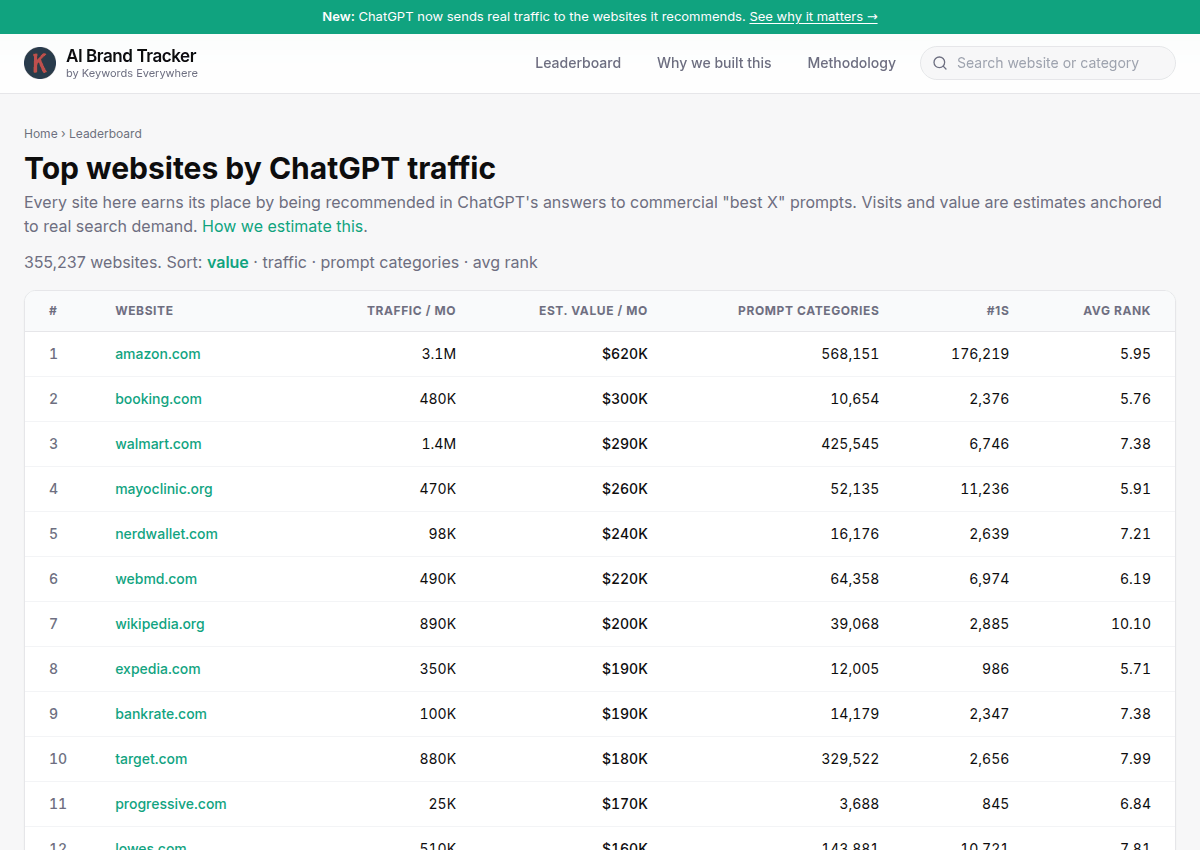
Answer-side measurement is what closes the loop: your analytics show the clicks, the tracker shows the recommendations, and the gap between them is your dark traffic, estimated instead of imagined.
Why the small number carries big value
AI-referred visitors arrive pre-advised: something already compared the options and pointed at you, so they land closer to a decision than a cold search click. Treat the segment's conversion rate, not its size, as the number that argues for the channel.
The strategic read: a small, converting, growing channel whose influence is systematically undercounted is exactly the kind of thing worth being early to, which is the entire thesis of the recommendation playbook.
The one-line takeaway: ChatGPT traffic arrives three ways: tagged referral clicks you can count, brand searches wearing the wrong label, and silent acts you never see. Segment the referrers, watch brand-search lift beside them, and measure the answer side to size what attribution misses.